


The No-Go Zone
The No-Go Zone
Spot danger—even when someone seems friendly.
Turns an uncomfortable topic into an easy, everyday conversation
Prepare together with illustrated safety stories.
Couldn't load pickup availability

The No-Go Zone
-

“Bought this for my youngest son and we’ve been reading a story at a time together. A few of his answers to ‘what would you do?’ surprised me. I’d assumed he knew things we hadn’t actually talked about properly. Having the pictures and a situation to discuss made it much easier to explain.”
-

“Got this for my youngest daughter, who usually says ‘I know, Mum’ before I’ve finished the sentence. The stories actually got her talking, and we’ve been reading a few pages together and discussing what she’d do. Some of her answers weren’t what I expected. Definitely easier than getting her to sit through another one of my lectures!”
-

“I asked my son what he’d do if someone offered him a lift. His first question was, ‘What car?’ So yes, we had a bit to cover. We’ve been reading the stories together and practising who to check with and what to say. Much easier than me repeating ‘be careful’ and hoping it sinks in.”


Why choose The No-Go Zone?
Why choose The No-Go Zone?
You’ve told your child to “be careful.” But would they know what to do if someone said, “Your mum sent me,” or asked them to help find a missing dog?
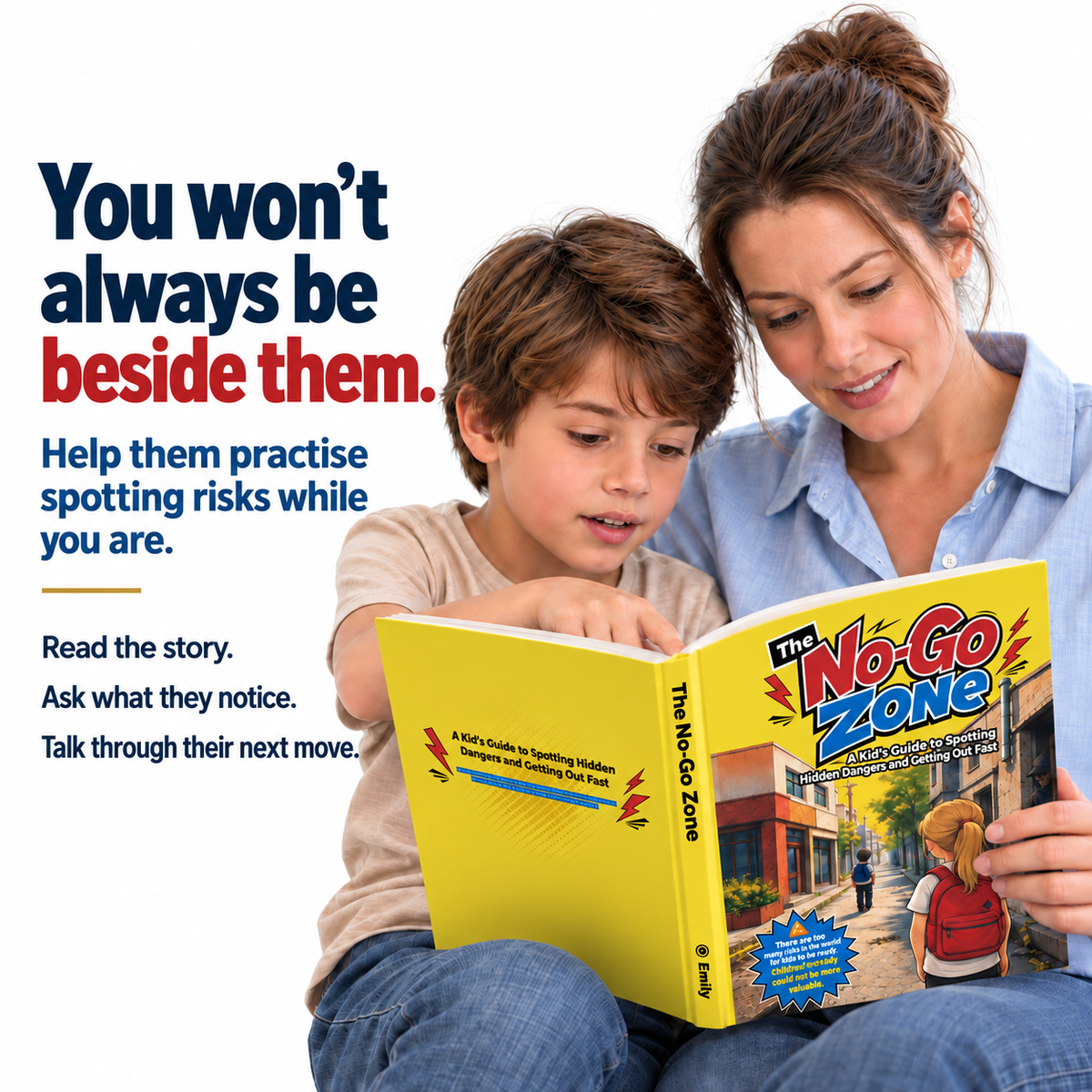
The No-Go Zone makes those conversations easier to start. Illustrated stories give you situations to explore together, helping your child recognise warning signs and think through their next move. It’s a practical way to prepare for moments when you may not be beside them.
What will my child learn?
What will my child learn?
Help your child recognise when a request needs checking—even if the person seems friendly or knows their name. Explore when to keep their distance, refuse a request and turn to a trusted adult.
The stories also give you opportunities to practise clear responses, such as “I need to check first” and “No, I’m getting my mum.” Your child can rehearse what to say when they feel unsure or pressured.
How do we use it together?
How do we use it together?
Read a story together, then pause and ask: “What do you notice?” “Would you go?” “Who could you ask for help?” Let your child explain their thinking before talking through the situation.
Then practise what they could say and do. Take turns playing the characters and revisit any parts they find confusing. Each story gives you a starting point for a conversation—and a chance to understand where your child needs more guidance.
Shipping & Returns
Shipping & Returns
SHIPPING POLICY & REFUND POLICY.
We process orders within 1–2 business days and ship within 7-10 business days (shipping times may vary for international orders). If you’re not completely satisfied with ZENTRO, you can return it within 30 days of delivery for a refund. Products must be unopened and in their original packaging, and return shipping is the customer’s responsibility unless the item arrived damaged or incorrect.


LIMITED STOCK AVAILABLE!
READ TOGETHER. PRACTICE SAYING NO.
50,000+ HAPPY CUSTOMERS!
LIMITED STOCK AVAILABLE!
READ TOGETHER. PRACTICE SAYING NO.
50,000+ HAPPY CUSTOMERS!
LIMITED STOCK AVAILABLE!
READ TOGETHER. PRACTICE SAYING NO.
50,000+ HAPPY CUSTOMERS!
LIMITED STOCK AVAILABLE!
READ TOGETHER. PRACTICE SAYING NO.
50,000+ HAPPY CUSTOMERS!
LIMITED STOCK AVAILABLE!
READ TOGETHER. PRACTICE SAYING NO.
50,000+ HAPPY CUSTOMERS!
LIMITED STOCK AVAILABLE!
READ TOGETHER. PRACTICE SAYING NO.
50,000+ HAPPY CUSTOMERS!
LIMITED STOCK AVAILABLE!
READ TOGETHER. PRACTICE SAYING NO.
50,000+ HAPPY CUSTOMERS!
LIMITED STOCK AVAILABLE!
READ TOGETHER. PRACTICE SAYING NO.
50,000+ HAPPY CUSTOMERS!
LIMITED STOCK AVAILABLE!
READ TOGETHER. PRACTICE SAYING NO.
50,000+ HAPPY CUSTOMERS!
LIMITED STOCK AVAILABLE!
READ TOGETHER. PRACTICE SAYING NO.
50,000+ HAPPY CUSTOMERS!
LIMITED STOCK AVAILABLE!
READ TOGETHER. PRACTICE SAYING NO.
50,000+ HAPPY CUSTOMERS!
LIMITED STOCK AVAILABLE!
READ TOGETHER. PRACTICE SAYING NO.
50,000+ HAPPY CUSTOMERS!

Help them know when to say no.
You’ve taught your child to be polite, helpful and respectful. But would they recognise when a request puts them at risk?
Someone offering a lift. An adult asking them to follow. A person saying, “Your mum sent me.”
The No-Go Zone brings these decisions into focus through illustrated stories you can explore together. Help your child spot warning signs, question unexpected requests, and practise saying no or getting help.
Give them words to use—not just warnings to remember.
“We’ve been reading one story after dinner and talking about it. My son likes pointing things out in the pictures, including things I’ve missed, which he takes great pleasure in. It’s given us an easy way to bring up safety without me having to launch into a big speech.”
“The story about someone asking for help finding a dog really got my attention. My daughter loves animals and would immediately want to help. We talked about how she could get an adult involved instead of going with the person. Having that example in front of us made the conversation much easier.”
“Bought this for my grandson and read some of it with him over the weekend. He understood the pictures straight away, but we took longer talking through what he could actually say. We practised a few responses together. I liked that we could take our time and come back to anything he wasn’t sure about.”
“We’ve been reading one story after dinner and talking about it. My son likes pointing things out in the pictures, including things I’ve missed, which he takes great pleasure in. It’s given us an easy way to bring up safety without me having to launch into a big speech.”
“The story about someone asking for help finding a dog really got my attention. My daughter loves animals and would immediately want to help. We talked about how she could get an adult involved instead of going with the person. Having that example in front of us made the conversation much easier.”
“Bought this for my grandson and read some of it with him over the weekend. He understood the pictures straight away, but we took longer talking through what he could actually say. We practised a few responses together. I liked that we could take our time and come back to anything he wasn’t sure about.”
“We’ve been reading one story after dinner and talking about it. My son likes pointing things out in the pictures, including things I’ve missed, which he takes great pleasure in. It’s given us an easy way to bring up safety without me having to launch into a big speech.”
“The story about someone asking for help finding a dog really got my attention. My daughter loves animals and would immediately want to help. We talked about how she could get an adult involved instead of going with the person. Having that example in front of us made the conversation much easier.”
“Bought this for my grandson and read some of it with him over the weekend. He understood the pictures straight away, but we took longer talking through what he could actually say. We practised a few responses together. I liked that we could take our time and come back to anything he wasn’t sure about.”
“We’ve been reading one story after dinner and talking about it. My son likes pointing things out in the pictures, including things I’ve missed, which he takes great pleasure in. It’s given us an easy way to bring up safety without me having to launch into a big speech.”
“The story about someone asking for help finding a dog really got my attention. My daughter loves animals and would immediately want to help. We talked about how she could get an adult involved instead of going with the person. Having that example in front of us made the conversation much easier.”
“Bought this for my grandson and read some of it with him over the weekend. He understood the pictures straight away, but we took longer talking through what he could actually say. We practised a few responses together. I liked that we could take our time and come back to anything he wasn’t sure about.”
“We’ve been reading one story after dinner and talking about it. My son likes pointing things out in the pictures, including things I’ve missed, which he takes great pleasure in. It’s given us an easy way to bring up safety without me having to launch into a big speech.”
“The story about someone asking for help finding a dog really got my attention. My daughter loves animals and would immediately want to help. We talked about how she could get an adult involved instead of going with the person. Having that example in front of us made the conversation much easier.”
“Bought this for my grandson and read some of it with him over the weekend. He understood the pictures straight away, but we took longer talking through what he could actually say. We practised a few responses together. I liked that we could take our time and come back to anything he wasn’t sure about.”
“We’ve been reading one story after dinner and talking about it. My son likes pointing things out in the pictures, including things I’ve missed, which he takes great pleasure in. It’s given us an easy way to bring up safety without me having to launch into a big speech.”
“The story about someone asking for help finding a dog really got my attention. My daughter loves animals and would immediately want to help. We talked about how she could get an adult involved instead of going with the person. Having that example in front of us made the conversation much easier.”
“Bought this for my grandson and read some of it with him over the weekend. He understood the pictures straight away, but we took longer talking through what he could actually say. We practised a few responses together. I liked that we could take our time and come back to anything he wasn’t sure about.”
“We’ve been reading one story after dinner and talking about it. My son likes pointing things out in the pictures, including things I’ve missed, which he takes great pleasure in. It’s given us an easy way to bring up safety without me having to launch into a big speech.”
“The story about someone asking for help finding a dog really got my attention. My daughter loves animals and would immediately want to help. We talked about how she could get an adult involved instead of going with the person. Having that example in front of us made the conversation much easier.”
“Bought this for my grandson and read some of it with him over the weekend. He understood the pictures straight away, but we took longer talking through what he could actually say. We practised a few responses together. I liked that we could take our time and come back to anything he wasn’t sure about.”
“We’ve been reading one story after dinner and talking about it. My son likes pointing things out in the pictures, including things I’ve missed, which he takes great pleasure in. It’s given us an easy way to bring up safety without me having to launch into a big speech.”
“The story about someone asking for help finding a dog really got my attention. My daughter loves animals and would immediately want to help. We talked about how she could get an adult involved instead of going with the person. Having that example in front of us made the conversation much easier.”
“Bought this for my grandson and read some of it with him over the weekend. He understood the pictures straight away, but we took longer talking through what he could actually say. We practised a few responses together. I liked that we could take our time and come back to anything he wasn’t sure about.”
“We’ve been reading one story after dinner and talking about it. My son likes pointing things out in the pictures, including things I’ve missed, which he takes great pleasure in. It’s given us an easy way to bring up safety without me having to launch into a big speech.”
“The story about someone asking for help finding a dog really got my attention. My daughter loves animals and would immediately want to help. We talked about how she could get an adult involved instead of going with the person. Having that example in front of us made the conversation much easier.”
“Bought this for my grandson and read some of it with him over the weekend. He understood the pictures straight away, but we took longer talking through what he could actually say. We practised a few responses together. I liked that we could take our time and come back to anything he wasn’t sure about.”
“We’ve been reading one story after dinner and talking about it. My son likes pointing things out in the pictures, including things I’ve missed, which he takes great pleasure in. It’s given us an easy way to bring up safety without me having to launch into a big speech.”
“The story about someone asking for help finding a dog really got my attention. My daughter loves animals and would immediately want to help. We talked about how she could get an adult involved instead of going with the person. Having that example in front of us made the conversation much easier.”
“Bought this for my grandson and read some of it with him over the weekend. He understood the pictures straight away, but we took longer talking through what he could actually say. We practised a few responses together. I liked that we could take our time and come back to anything he wasn’t sure about.”

Why Read The No-Go Zone?
Because danger doesn’t always look dangerous.
Sometimes it sounds like, “Your mum sent me.” Or, “Can you help me find my dog?” To a child taught to be polite and helpful, those requests can seem perfectly reasonable.
The No-Go Zone uses illustrated stories to help your child explore these moments before they face a similar decision themselves.
Read the situation together. Ask what they notice. Talk through why a request needs checking—and practise the words they could use to refuse or get help.
You’ll hear how your child thinks, discover what needs explaining, and have a clear starting point for conversations that can be difficult to begin.
Help them understand when to pause, when to say no, and who to turn to.
What People Like You Are Saying About Us!
-

“My son will argue with me about wearing socks but worries about being rude to other adults. That’s why I bought this. We’ve been talking about when it’s okay to say no and who he can ask for help. Having an actual story to discuss has been much easier than trying to explain every possible situation myself.”
-

“The missing dog story was the one I wanted to discuss with my daughter. She’d happily volunteer our house as an animal shelter, so I knew she’d want to help. It gave us a useful way to talk about getting a trusted adult involved. We spent longer chatting about that story than actually reading it.”
-

“Bought this for my niece. Usually I’m the aunt buying something noisy, so my sister appreciated the change 😂 We read a couple of stories together when she stayed over. She had plenty of questions, including a few I had to think about myself. I liked that it got us talking about something we don’t normally discuss.”


Frequently Asked Questions (FAQ)
❓ What makes The No-Go Zone different?
❓ What makes The No-Go Zone different?
The No-Go Zone turns “be careful” into situations your child can think through. Illustrated stories give you concrete examples to discuss: what looks wrong, what needs checking and what they could do next.
❓ What will my child learn?
❓ What will my child learn?
The stories explore recognising warning signs, questioning unexpected requests and turning to trusted adults. You can practise useful responses together, including saying no and checking first—even when someone seems friendly or knows their name.
❓ Who is this book for?
❓ Who is this book for?
It’s for families who want to have clearer conversations about children’s safety, particularly as children become more independent. Parents, grandparents and carers can use the illustrations to start discussions and explore how a child would respond.
❓ Can my child read it on their own?
❓ Can my child read it on their own?
Children who are comfortable with the text can explore the stories independently. Reading together also gives you a chance to hear their thinking, answer questions and explain anything they find confusing. You can choose the approach that suits your child’s reading ability.
❓ Does it cover more than stranger danger?
❓ Does it cover more than stranger danger?
Yes. Alongside unexpected requests from adults, the book explores hidden dangers in places that may appear safe. The illustrated situations encourage children to look at what is happening around them and consider when they need help.
❓ Will the stories frighten my child?
❓ Will the stories frighten my child?
Some stories involve dangerous situations, and children respond differently. Preview the pages and take them at your child’s pace. Reading together lets you answer questions and focus the conversation on practical choices, trusted adults and getting help.
❓ How do we put the lessons into practice?
❓ How do we put the lessons into practice?
Choose a story and ask, “What do you notice?” and “What would you do?” Then practice a response together, including what your child could say and who they could approach. Revisit any parts they find difficult without making it feel like a test.